
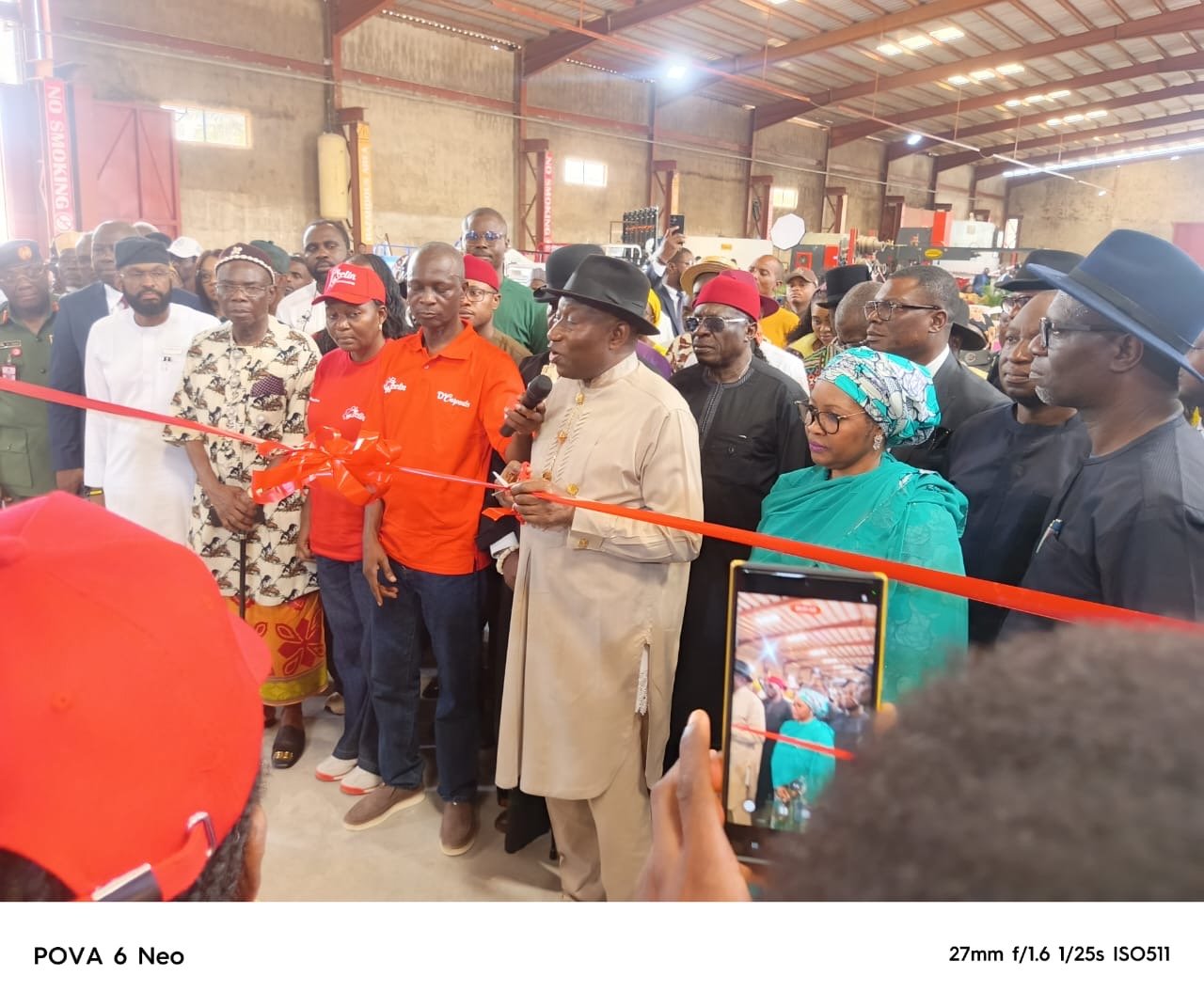

Former President Goodluck Jonathan has called on the Federal Government to prioritise industrialisation, technical skills development and local manufacturing as strategies to address unemployment and stimulate Nigeria’s economic growth.
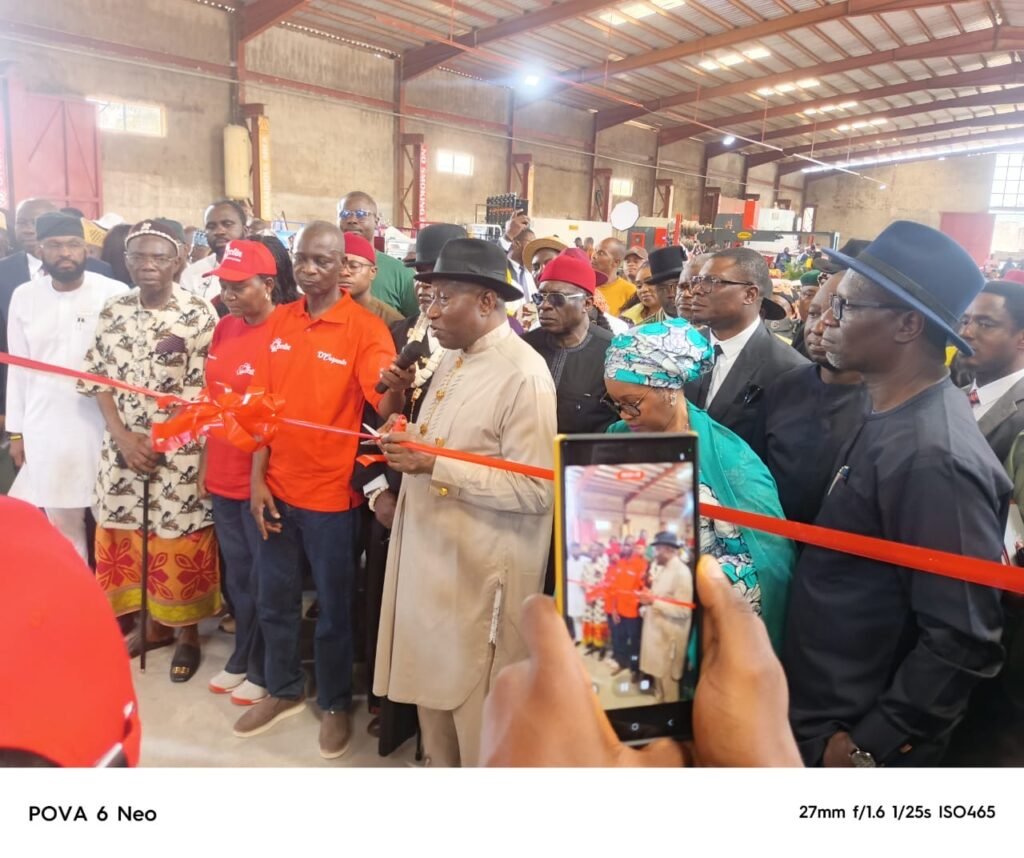
Jonathan made the call on Wednesday at the unveiling of a tricycle production facility operated by Zeetin Engineering Factory in Abuja, where he urged the government to transform Nigeria into a major production hub rather than rely heavily on imported goods.
He said the country’s large population, particularly its youthful demographic, presented an opportunity to build a productive economy through investments in factories, technology and technical education.
“With a population of over 200 million people, and young people above 65 per cent of the population, it is a huge number. So we must convert the country into a factory,” the former president said.
He added that expanding local production would create jobs, boost economic activity and strengthen Nigeria’s capacity to manufacture goods for domestic consumption and export.
Jonathan commended Zeetin Engineering and its founder, Robert Azibaola, for investing in local manufacturing, describing the initiative as an example of the technological entrepreneurship the country needs.
The former president argued that the success of manufacturing economies such as China was driven not by cheap labour alone, but also by the availability of skilled workers across different areas of production and technology.
He urged Nigeria to invest in developing similar technical capabilities, noting that the global economy was increasingly driven by technology and human ingenuity.
“The world is driven by technology. It is driven by the brains of human beings. And we must develop our best brains,” Jonathan said.
He called for renewed investment in science, technology and innovation, recalling the Presidential Scholarship for Innovation and Development programme introduced during his administration to develop skilled professionals in scientific and technological fields.
Jonathan expressed regret that the programme had been discontinued after his administration left office, stressing that Nigeria needed sustained policies to develop its technical workforce and reduce dependence on imported products.
He maintained that investing in local knowledge and technological capacity was essential to strengthening the country’s industrial base.
Speaking at the event, Zeetin founder Robert Azibaola called for a shift in national priorities towards investments that build productive capacity. He argued that Nigeria must focus on manufacturing machinery and industrial components instead of spending excessively on imported luxury goods.
Azibaola said investments in domestic manufacturing would create employment and strengthen the local economy, while continued purchases of expensive foreign-made products would support production and jobs in other countries.
“If you keep buying private jets from foreign countries, all you are doing is empowering those countries,” he said. “But if you establish a plant that produces a propeller engine in Nigeria, you are going to empower a lot of people.”
He also identified metal processing and casting as critical to industrial development, noting that metals were essential not only for construction projects but also for producing engines, machinery and other industrial components.
According to him, Nigeria must develop the capacity to process metals and manufacture the components required by local industries.
He called on Nigerian entrepreneurs to invest more of their resources in productive ventures at home rather than transfer capital abroad.
Azibaola also argued that a service-led economy alone could not provide jobs on the scale required by Nigeria, pointing to the limited employment capacity of sectors such as banking and telecommunications compared with large manufacturing industries.