
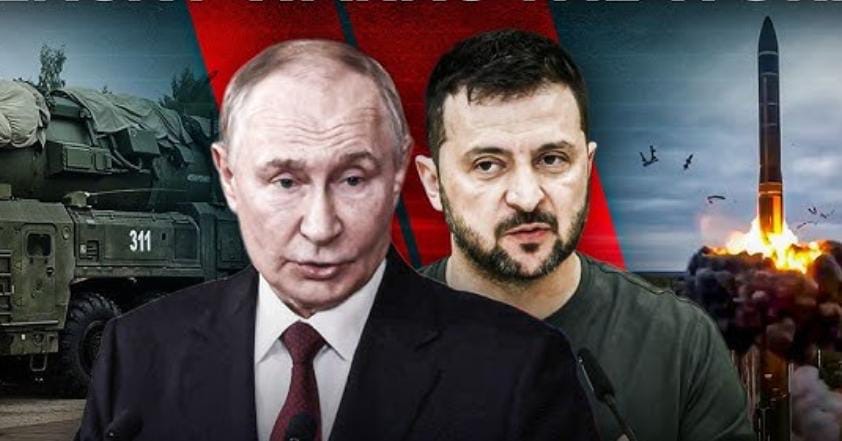

February 24, 2026, marks four years since Russia launched its full-scale war against Ukraine, four years of violence, terror, and suffering inflicted on innocent people. For four years, Ukraine has been fighting for its right to exist as a nation and the rules-based international order.
In this war for which the Kremlin coined the euphemism ‘special military operation,’ Russia has failed to achieve any strategic objective – military, economic, or political.
Instead, the Russian economy is stagnating due to sanctions, the demographic situation is rapidly deteriorating, Russia has turned into a pariah state, and NATO has expanded.
Moving forward, the adverse effects on the Kremlin are set to escalate.
Putin launched the war against Ukraine counting on a swift victory that was supposed to secure Russia’s status as a ‘superpower’ and a ‘second pole of power’ in a ‘multipolar world.’ However, the blitzkrieg – ‘Kyiv in three days,’ the ‘destruction of the Ukrainian army,’ and so on – failed, and the protracted war of attrition has weakened Russia.
For a long time, the size of the Russian force in Ukraine has remained at just over 700,000 personnel. The Kremlin is unable to increase this number despite the active recruitment of Russians and foreigners, including those from African countries. This is because Ukrainian soldiers eliminate a thousand occupiers every day – Russia’s monthly losses exceed what its recruitment system is capable of supplying.
As of today, according to data from the Ukrainian Defense Forces, Russia’s personnel losses stand at approximately 1.2 million. In December 2025 alone, the Ukrainian military neutralized 35,000 Russian troops (killed and wounded), followed by about 30,000 in January of this year. The price Russia pays for every kilometer of seized Ukrainian land is 156 soldiers.
The Armed Forces of Ukraine have already destroyed a significant portion of Russian equipment and reserves. Domestic production within Russia fails to cover current losses. In this situation, the Kremlin is increasingly resorting to recruiting foreign mercenaries, particularly from African countries.
But over these four years, the ‘frontline collapse’ that Russia hoped for never happened. Ukrainian warriors continue to hold the line firmly.
The war and economic sanctions have caused a structural degradation of the Russian economy, with oil revenues plunging by 24-49%, a record budget deficit of 8.291 trillion rubles, and the exhaustion of reserves.
The war has become a catalyst for Russia’s final transformation into a closed, repressive state, where censorship, control, and fear have replaced political competition and freedom of speech. Russian security forces have been granted expanded powers. The Kremlin cultivates the image of a ‘besieged fortress,’ justifying the restriction of Russians’ rights and freedoms by the necessity of a mythical ‘national defense’.
Russia continues to seal off its information space by blocking international websites, limiting access to independent news, and exerting total control over education and culture.
Millions of citizens have fled Russia to escape mobilization and repression. The staggering number of dead, wounded, and emigrants has resulted in a ‘lost generation’ of working-age males, dealing a severe blow to Russia’s labor force and long-term demographic sustainability.
On the international stage, Russia has found itself in isolation, having lost access to a significant portion of Western markets, technologies, and financial instruments. The country has effectively fallen out of many global economic and political processes.”
Russia has significantly lost its influence across the post-Soviet space, particularly in the South Caucasus, Central Asia, Moldova, and beyond.
Ukraine’s international partners demonstrate steadfast support: since the very beginning of the full-scale invasion, financial, military, and humanitarian aid has been continuous, alongside the imposition of large-scale economic sanctions against Russia.
EU nations have substantially bolstered their defense ties with Ukraine, concurrently ramping up investments in their domestic security. The accession of Finland (in 2023) and Sweden (in 2024) to NATO marked a historic expansion, nearly tripling the Alliance’s direct land border with Russia (approximately 1,300+ km).
The two Nordic states have long maintained military neutrality, but that changed in February 2022 when Russia launched its full-scale invasion of Ukraine – the biggest war on the European continent since World War Two.
For many Finns, the Russia-Ukrainian war brought a haunting sense of familiarity. It was in late 1939 that the Soviets invaded Finland. For more than three months the Finnish army put up fierce resistance, despite being heavily outnumbered. Finland held out until March 1940 but lost its eastern province of Karelia to Russia. They avoided occupation, but ended up losing 10% of their territory.
Putin believes NATO expansion is a direct threat to his country’s security – and claimed it was the reason he launched the 2022 war in Ukraine. But russia invasion had the opposite effect by only serving to extend Nato’s reach. Finland and Sweden’s accession was a particular setback, further extending Nato’s influence over the Baltic Sea.
At the same time, the accession of Finland and Sweden to NATO as new members pointedly contradicts Russia’s notorious ultimatum to ‘return NATO to its 1997 posture’.
Driven by economic strain and dwindling resources, the Kremlin is becoming subservient to a narrow group of allies. To them, Russia is no longer an equal peer, but merely a source of raw materials, a military tool, and a dumping ground for their exports.
Ukraine, meanwhile, has stood its ground, preserved its statehood, and built one of the most battle-ready armies in the world. Furthermore, the continuation of Russian aggression against Ukraine will only lead to a further increase in strategic losses for the Kremlin regime and Russia as a state.